
Solución para la prevención y eliminación de la cal
IntegroTM, reestructuración del agua sin productos químicos.
El sistema de reestructuración del agua más eficaz del sector
Esta tecnología única elimina los depósitos de cal existentes en los sistemas de agua, equipos y electrodomésticos, además de prevenir la acumulación futura de cal. Nuestra solución es eficaz independientemente de la dureza, la temperatura y la presión del agua, condiciones en las que otras soluciones menos eficaces fallan.
A diferencia de las soluciones tradicionales de acondicionamiento del agua, que fuerzan la precipitación de los iones que forman incrustaciones,IntegroTMdescompone y reestructura estos iones, dejándolos en solución en su forma neutra individual. Para obtener más detalles sobre la diferencia entre nuestra tecnología y otros sistemas (imanes, bobinas, intercambio catalítico, etc.), consulteaquí (¿Funciona el acondicionamiento del agua?).
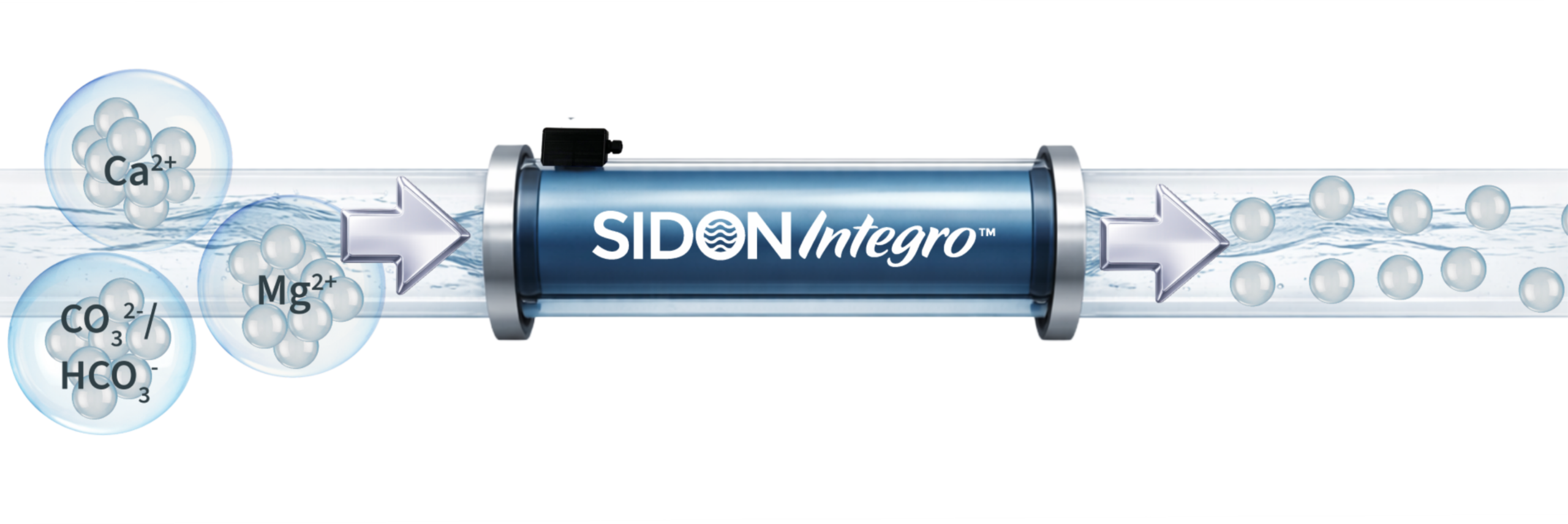
Cómo funciona Integro™
El Integro modifica la actividad iónica del agua, alterando las condiciones en las que el carbonato cálcico suele formar incrustaciones duras y adherentes en las superficies. Esto ayuda a mantener los minerales responsables de la dureza en suspensión en el agua que fluye, en lugar de que formen depósitos densos en los equipos.
- Los minerales que contribuyen a la dureza disuelta y otras sustancias que forman incrustaciones entran en el Integro junto con el agua que fluye.
- A medida que el agua pasa por el Integro, las condiciones electroquímicas se modifican, lo que altera el proceso normal de formación de incrustaciones.
- El resultado es un agua en la que el carbonato cálcico tiene menos probabilidades de formar incrustaciones duras y adherentes en las superficies del sistema.
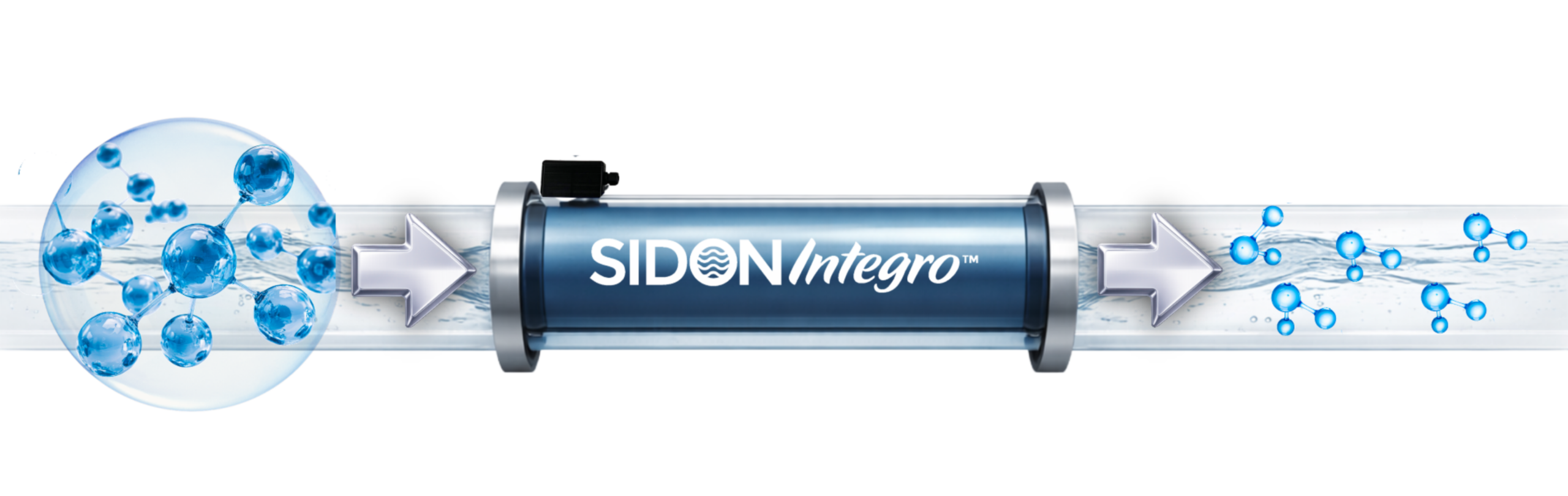
Nuestro efecto «Wetter Water»
Otro efecto asociado al agua tratada con Integro es la mejora de su capacidad de humectación. En la práctica, esto se suele describir como «agua más humectante»: agua que interactúa de forma más eficaz con las superficies, los medios de filtración y las estructuras de membrana.
- El agua entra en el Integro en su estado natural, en forma de gotas.
- A medida que el agua atraviesa el Integro, su comportamiento se modifica de tal forma que mejora el contacto y el flujo a través del medio filtrante.
- El resultado puede ser un «agua más fluida», es decir, agua que atraviesa con mayor facilidad los medios filtrantes y las membranas, lo que mejora el rendimiento de la filtración y de la ósmosis inversa.
El Integro mejora...
El uso de Integro permite obtener rápidamente ahorros significativos y cuantificables. Las características y ventajas de nuestra solución incluyen:
Prevención y eliminación de la cal
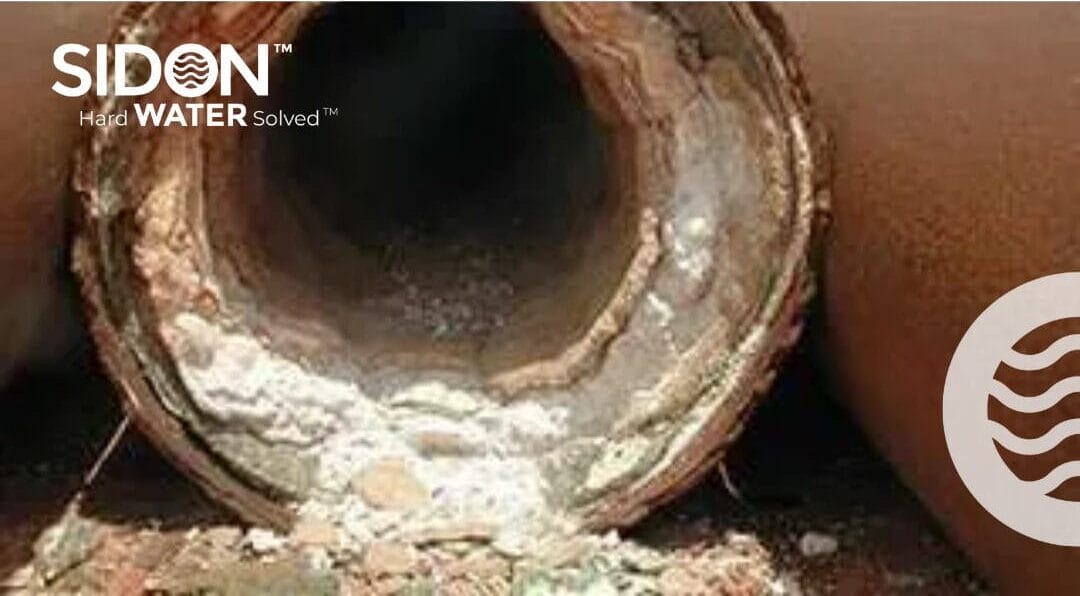
El sistema Integro™ previene eficazmente la formación de nuevas incrustaciones de cal y elimina la mayor parte de las acumulaciones existentes en un plazo de 1 a 3 meses.
Reducción significativa del óxido y la corrosión
Al inyectar electrones en el agua, Integro™ ayuda a reducir la corrosión en sus sistemas, protegiendo los equipos y prolongando su vida útil.
Control bacteriológico mejorado
El sistema evita la acumulación de cal y biopelícula, que pueden albergar bacterias nocivas como la Legionella.
Reducción del consumo energético
El Integro™ mejora la transferencia de calor hasta en un 40 % al mantener limpias las superficies calefactoras.
Respetuoso con el medio ambiente
Esta tecnología no utiliza productos químicos y no requiere mantenimiento periódico; reestructura el agua de forma natural sin dañar el medio ambiente y ofrece un tratamiento del agua sostenible y rentable.
Estudios de casos sobre la prevención y eliminación de la cal
Descubre aquí nuestra gama completa de casos prácticos




Frequently Asked Questions
Prevención y eliminación de la cal
Can removing old scale reveal leaks or existing defects?
Yes. Old scale can sometimes mask degraded seals, pinholes, failing valves or other defects. When historic deposits reduce, underlying mechanical problems may become visible. This is a system-condition issue rather than a new defect created by the treatment.
Can released deposits block strainers, filters or heat exchangers?
It can. Historical deposits that begin to release may migrate to filters, strainers, small orifices, shower heads or heat-exchanger passages. Where a system is heavily scaled, Sidon Water recommends an appropriate commissioning and inspection plan so released material can be managed.
Can released scale appear as flakes, powder or grit?
Yes. As historic deposits become less stable, some systems may release fine white material, grit, flakes or other debris. This can be a normal transitional effect and should be considered when commissioning older or heavily scaled systems.
How long does existing scale take to come away?
There is no fixed period. The rate depends on deposit thickness and composition, water chemistry, temperature, flow, system design and how long the deposit has been present. Field experience ranges from relatively rapid visible changes to progressive improvement over several months.
Does the Integro™ remove existing limescale?
The Integro™ is intended both to reduce new hard scale formation and to support gradual removal and destabilisation of existing deposits. Existing scale should not be expected to disappear immediately or uniformly from every part of a system.
How quickly will I notice a difference?
That depends on what is being measured. Reduction in new scale formation may be observed relatively quickly at some outlets or heat-transfer surfaces, while the gradual removal or destabilisation of historic deposits can take weeks or months (usually 1-3 months). Large, heavily scaled systems may take longer.
Does the Integro™ prevent every type of scale or deposit?
Does the Integro™ prevent every type of scale or deposit?
No technology should be presented as preventing every deposit under every condition. The Integro™ has primarily been tested with mineral scaling, particularly calcium-carbonate-related scale. Significant benefits have been observed in systems where deposits involving silica, iron, manganese, process contamination, corrosion products or biological material are present, but further quantification of effectiveness is needed in these areas.
Are there water chemistries or chemicals that may be unsuitable?
Yes. Applications involving strong caustics, unusual chemical dosing, aggressive cleaning-in-place regimes or specialist process chemistry should be reviewed before specification. The Integro™ should not be assumed to be compatible with every chemical-treatment programme without assessment.
Does the Integro™ work in very hard water?
Does the Integro™ work in very hard water?
The Integro™ has been used in very hard-water applications, including borehole supplies, and handles varying hardness levels without manual intervention or adjustment.
Is there a maximum water hardness for the Integro™?
No universal maximum has yet been defined. Hardness is only one part of the picture. Alkalinity, pH, temperature, dissolved solids, flow, pressure, residence time, the type of scale being formed, and other chemicals present in the system can all matter.
Is the Integro™ a water softener, and does it remove hardness minerals?
Is the Integro™ a water softener?
No. A conventional ion-exchange softener removes calcium and magnesium ions and replaces them, typically with sodium. The Integro™ does not remove hardness minerals and therefore does not chemically soften the water. It is a scale-management technology rather than an ion-exchange softener.
Does the Integro™ remove calcium and magnesium from the water?
No. Calcium and magnesium remain in the water. The objective is to change the way scale-forming minerals behave so they are less likely to form hard, adherent deposits on heat-transfer surfaces, pipework, valves, outlets and other equipment.
Will a hardness test show that the Integro™ is working?
Usually not. Because the hardness minerals remain in the water, a conventional hardness test may show little or no change before and after the Integro™. Performance should be assessed against the actual operational problem being treated, such as scale accumulation, maintenance frequency, heat-transfer performance or membrane behaviour.
How does the Integro™ reduce hard, adherent limescale?
¿Qué es Integro™?
The Integro™ is an inline electrochemical water-conditioning system designed primarily to reduce the formation of hard, adherent mineral scale and to help existing scale deposits gradually become less stable. It treats water without salt-based regeneration, routine chemical dosing or sacrificial treatment media.
How does the Integro™ work?
Water passes through a purpose-designed treatment chamber in which a controlled electrochemical effect influences the way scale-forming minerals behave and crystallise. Rather than removing calcium and magnesium from the water, the Integro™ is designed to shift mineral growth away from hard, adherent deposits on equipment surfaces and towards less troublesome forms within the flowing water.