
Legionella-bestrijdingsoplossing
De Integro™-technologie van Sidon Water vermindert legionellabacteriën effectief door kalkaanslag en biofilm te verwijderen uit warm-, koud- en proceswatersystemen. Download onze gids voor legionellabestrijding en ontdek hoe de Integro™-technologie van Sidon Water kan helpen om de risico’s op legionella in uw bedrijf effectief te verminderen.
Het probleem
Kalk en de daaruit voortkomende biofilm vormen een ideale voedingsbodem voor legionella en andere bacteriën.
Wat is kalkaanslag?
Kalk, dat voornamelijk bestaat uit calciumcarbonaat (CaCO3), hoopt zich op in warmwatersystemen, leidingen en apparaten. Deze ophoping kan schade veroorzaken aan leidingen en verwarmingsonderdelen, waardoor de efficiëntie afneemt en de bedrijfskosten van apparatuur stijgen.
Wat is biofilm?
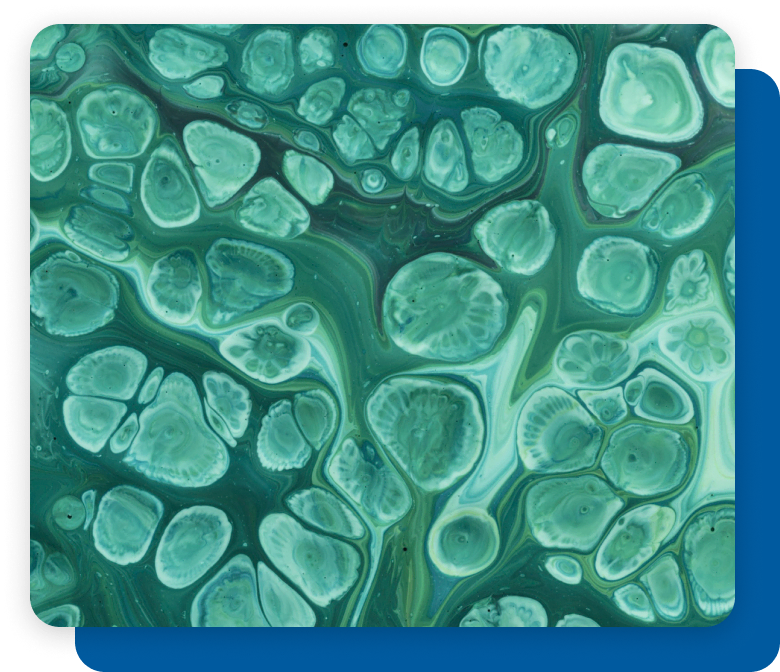
Een biofilm is een gemeenschap van levende micro-organismen, waaronder bacteriën, die zich in een vochtige omgeving aan een oppervlak hechten en zich daar voortplanten. Ze hechten zich door een kleverige, lijmachtige substantie af te scheiden.
Wat is Legionella?
Legionella is een bacterie die kan leiden tot de veteranenziekte, een ernstige en mogelijk dodelijke vorm van longontsteking. Mensen lopen de veteranenziekte op door het inademen van kleine waterdruppeltjes (aerosolen) die in de lucht zweven en legionellabacteriën bevatten.
Wat is het verband tussen kalkaanslag, biofilm en legionella?
Waar kalkaanslag is ontstaan, als gevolg van het neerslaan van mineralen in hard water en de binding daarvan aan oppervlakken, ontstaat een perfecte voedingsbodem voor bacteriën.
Factoren die de groei van legionella bevorderen:
• Legionellabacteriën gedijen bij temperaturen tussen 20 en 45 °C.
• Stilstaand water binnen dit temperatuurbereik zorgt ervoor dat legionella zich kan vermenigvuldigen.
• Kalk, dat rijk is aan mineralen, wordt een voedingsbron voor legionella.
Als de bacteriën aanwezig zijn en zich vermenigvuldigen, vormen ze een biofilm. Als er eenmaal kalkaanslag en biofilm zijn ontstaan, zullen legionella en andere bacteriën zich vermenigvuldigen en gedijen in een omgeving waarin ze zich prettig voelen en voldoende voedingsstoffen vinden.
Voorkomen is beter dan genezen
Om een watersysteem legionellavrij te houden, moet het vrij zijn van kalkaanslag (inclusief biofilm) en bacteriën. Of het nu gaat om een koud-, warm- of processysteem, het beheersen van kalkaanslag is essentieel.
Chemische dosering is weliswaar effectief, maar ook duur, tijdrovend en schadelijk voor het milieu. Bovendien wordt het probleem erger naarmate er meer kalkaanslag ontstaat.
Het Integro™-voordeel voor legionellapreventie
De Integro™, een unieke technologie voor waterherstructurering geproduceerd door Sidon Water, kan zeker helpen als een secundaire controleoplossing die continu werkt.
Het wordt op uw watertoevoer geïnstalleerd en zorgt ervoor dat alle bestaande kalkaanslag in uw watersysteem wordt verwijderd. Het biedt ook volledige, voortdurende preventie en vermindert roest en corrosie aanzienlijk.
Dit wordt bereikt door de Integro™ die elektronen rechtstreeks in het water injecteert. De elektronen verstoren de binding die anders zou ontstaan tussen de mineralen die kalkaanslag vormen. Dankzij dit effectieve systeem kunt u eindelijk de risico's van legionella beperken.
Dankzij de Integro™-technologie is er geen periodiek onderhoud nodig en worden er geen chemicaliën gebruikt. Dit maakt het een duurzame en milieuvriendelijke oplossing.
Wat u krijgt:
- Verminderde niveaus van legionella
- Kalkaanslag verwijderen en voorkomen
- Roest- en corrosiebeheersing
- Geen zout
- Verbeterde waterkwaliteit
- Aanzienlijk lager energieverbruik
- Vermindering van het gebruik van chemicaliën
- Geen magneten
Vergelijking van oplossingen
- Effectief
- Gedeeltelijk effectief
- Ineffectief
Kenmerken | Sidon Integro™️ | Andere waterbehandelingsapparaten | Waterontharding | Omgekeerde osmose | Chemische ontkalking |
|---|---|---|---|---|---|
Voorkomt kalkaanslag | |||||
Verwijdert bestaande kalkaanslag | |||||
Onderhoudsvrij | |||||
Geen zout of chemicaliën nodig | |||||
Verlaagt energiekosten | |||||
Vermindert legionella |
Casestudy's over legionella
Bekijk hier het volledige aanbod aan casestudy’s


Andere bronnen over Legionella
Frequently Asked Questions
Legionellabestrijding
What should be monitored after installation on a water-hygiene-sensitive site?
How do I know that the Integro™ is operating correctly?
Basic checks confirm that the control system is energised and functioning, but true performance verification should relate to the intended outcome. Depending on the application this might be scale condition, energy intensity, cleaning demand, heat-exchanger performance, membrane pressure/flux, permeate conductivity, chemical use or downtime.
What should be measured during a trial?
The metrics depend on the application. They may include scale condition, pressure drop, heat-transfer performance, energy per unit output, maintenance time, component failures, chemical use, cleaning frequency, membrane pressure/flux, permeate quality, conductivity, recovery and downtime.
Can microbial counts change while old deposits are being released?
Heavily scaled or contaminated systems may undergo a transition as deposits and debris are released. Water-hygiene-sensitive sites should therefore consider appropriate flushing, outlet cleaning, filtration and microbiological monitoring during commissioning.
How should the Integro™ fit into a wider water-safety plan?
Does the Integro™ kill Legionella?
No. The Integro™ is not positioned as a primary disinfection technology and should not be presented as killing Legionella. Legionella control still requires an appropriate water-safety regime including temperature control, flushing, monitoring, disinfection where required and compliance with applicable guidance.
Does the Integro™ replace chlorination, UV or other disinfection?
No. The Integro™ is a scale-management technology. Where disinfection is required, chlorination, chlorine dioxide, UV, thermal control or other approved barriers should be retained or managed according to the system’s risk assessment and regulatory requirements.
Can reducing scale make outlets and distribution systems easier to keep clean?
Can the Integro™ help with Legionella risk?
Yes, as an indirect supporting measure. By reducing hard scale and under-deposit niches, the Integro™ may make systems easier to keep clean and can reduce surfaces on which biofilm can be protected. That does not replace formal Legionella control measures.
Can microbial counts change while old deposits are being released?
Heavily scaled or contaminated systems may undergo a transition as deposits and debris are released. Water-hygiene-sensitive sites should therefore consider appropriate flushing, outlet cleaning, filtration and microbiological monitoring during commissioning.
What commissioning precautions should be used on heavily scaled or water-hygiene-sensitive systems?
Can scale come off in flakes or powder?
Yes. As historic deposits become less stable, some systems may release fine white material, grit, flakes or other debris. This can be a normal transitional effect and should be considered when commissioning older or heavily scaled systems.
Can removing old scale reveal leaks or existing defects?
Yes. Old scale can sometimes mask degraded seals, pinholes, failing valves or other defects. When historic deposits reduce, underlying mechanical problems may become visible. This is a system-condition issue rather than a new defect created by the treatment.
Can microbial counts change while old deposits are being released?
Heavily scaled or contaminated systems may undergo a transition as deposits and debris are released. Water-hygiene-sensitive sites should therefore consider appropriate flushing, outlet cleaning, filtration and microbiological monitoring during commissioning.
Can microbial counts change while historic deposits are being released?
Heavily scaled or contaminated systems may undergo a transition as deposits and debris are released. Water-hygiene-sensitive sites should therefore consider appropriate flushing, outlet cleaning, filtration and microbiological monitoring during commissioning.
Does the Integro™ eliminate biofilm?
No blanket claim should be made that it eliminates biofilm. Scale reduction can reduce protected niches and may support improved system cleanliness, but biofilm control depends on the wider water-management regime.
Does the Integro™ replace chlorination, UV, thermal control or other disinfection?
No. The Integro™ is a scale-management technology. Where disinfection is required, chlorination, chlorine dioxide, UV, thermal control or other approved barriers should be retained or managed according to the system’s risk assessment and regulatory requirements.
Why does limescale matter in water-hygiene management?
Can the Integro™ help with Legionella risk?
Yes, as an indirect supporting measure. By reducing hard scale and under-deposit niches, the Integro™ may make systems easier to keep clean and can reduce surfaces on which biofilm can be protected. That does not replace formal Legionella control measures.
Can microbial counts change while old deposits are being released?
Heavily scaled or contaminated systems may undergo a transition as deposits and debris are released. Water-hygiene-sensitive sites should therefore consider appropriate flushing, outlet cleaning, filtration and microbiological monitoring during commissioning.
Does the Integro™ eliminate biofilm?
No blanket claim should be made that it eliminates biofilm. Scale reduction can reduce protected niches and may support improved system cleanliness, but biofilm control depends on the wider water-management regime.
Can the Integro™ help reduce Legionella risk?
Yes, as an indirect supporting measure. By reducing hard scale and under-deposit niches, the Integro™ may make systems easier to keep clean and can reduce surfaces on which biofilm can be protected. That does not replace formal Legionella control measures.
Does the Integro™ kill Legionella?
No. The Integro™ is not positioned as a primary disinfection technology and should not be presented as killing Legionella. Legionella control still requires an appropriate water-safety regime including temperature control, flushing, monitoring, disinfection where required and compliance with applicable guidance.