
INTEGRO™ SYSTEM KNOWLEDGE BASE
Frequently Asked Questions
Everything you need to know about the Integro™ electrochemical water-conditioning system.
Cant find what your looking for? … Try searching our knowledge hub below:
Categories
General Questions
1. What is the Integro™?
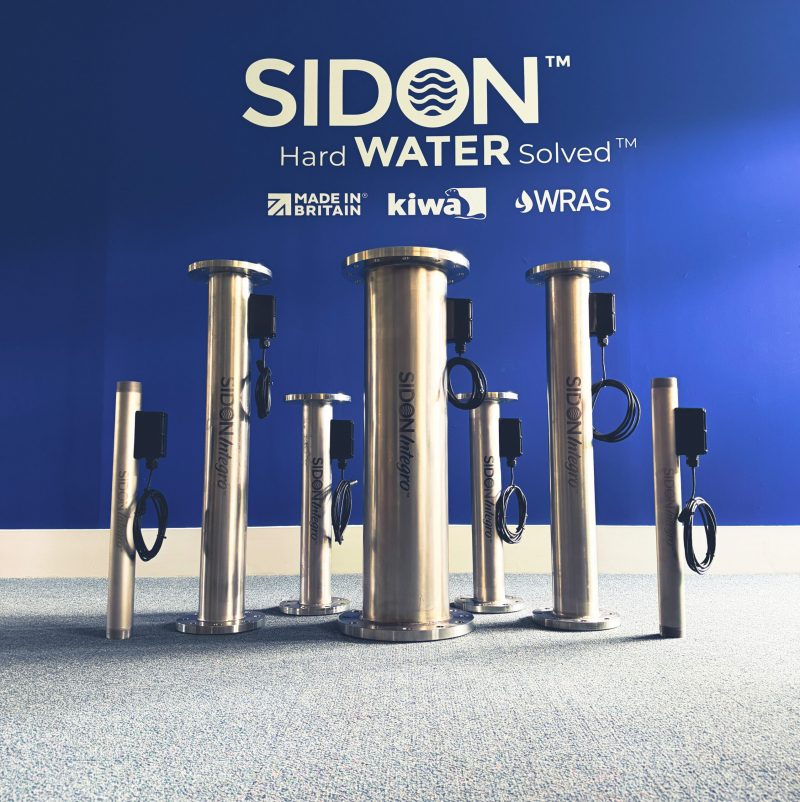
The Integro™ is an inline electrochemical water-conditioning system designed primarily to reduce the formation of hard, adherent mineral scale and to help existing scale deposits gradually become less stable. It treats water without salt-based regeneration, routine chemical dosing or sacrificial treatment media.
2. How does the Integro™ work?
Water passes through a purpose-designed treatment chamber in which a controlled electrochemical effect influences the way scale-forming minerals behave and crystallise. Rather than removing calcium and magnesium from the water, the Integro™ is designed to shift mineral growth away from hard, adherent deposits on equipment surfaces and towards less troublesome forms within the flowing water.
3. Is the Integro™ a water softener?
No. A conventional ion-exchange softener removes calcium and magnesium ions and replaces them, typically with sodium. The Integro™ does not remove hardness minerals and therefore does not chemically soften the water. It is a scale-management technology rather than an ion-exchange softener.
4. Does the Integro™ remove calcium and magnesium from the water?
No. Calcium and magnesium remain in the water. The objective is to change the way scale-forming minerals behave so they are less likely to form hard, adherent deposits on heat-transfer surfaces, pipework, valves, outlets and other equipment.
5. Does the Integro™ add anything to the water?
The Integro™ does not rely on adding salt, phosphate, antiscalant or other routine treatment chemicals to the water. The precise suitability of any installation still depends on the water chemistry and the wider treatment system.
6. Does the Integro™ change pH, TDS or mineral content?
The Integro™ is not designed to materially reduce total dissolved solids or remove hardness minerals. Bulk pH and TDS would not normally be expected to change simply because the Integro™ is operating. If the application requires a specific pH, conductivity or mineral limit, that requirement should be considered separately.
7. Does the Integro™ really work?
The technology has been used across commercial, industrial and water-treatment applications and has also been independently evaluated in laboratory programmes, including reverse-osmosis work. And while it is widely regarded as the most effective water conditioning technology on the market, as with any water-treatment system, the right question is not simply whether the device works, but whether it delivers the required measurable outcome in the specific application.
8. What evidence is available for the Integro™?
Available evidence includes independent laboratory evaluation, field installations, before-and-after inspections, operating data, customer maintenance feedback and application-specific trials. The strength and relevance of the evidence varies by application, so Sidon Water should match the evidence presented to the customer’s actual use case.
9. Does the Integro™ work in very hard water, and is there a maximum hardness?
The Integro™ has been used in very hard-water applications, including borehole supplies, and handles varying hardness levels without manual intervention or adjustment. No universal maximum has yet been defined because hardness is only one part of the picture: alkalinity, pH, temperature, dissolved solids, flow, pressure, residence time, the type of scale being formed and other chemicals present in the system can all matter.
Installation & Sizing
10. How many Integro™ units do I need?
There is no fixed answer based only on building size. The number of units depends on where untreated or stored water enters the system, where scale-sensitive equipment sits, whether water is recirculated, how long it remains in storage, and whether separate hydraulic circuits exist. A simple building may need one unit; a complex hot-water or process system may require several strategically positioned units.
11. Do I need one Integro™ on the cold water and another on the hot water?
Often, yes. In many commercial hot-water systems a typical arrangement is one unit on the principal incoming cold-water supply or outlet from cold-water storage, plus a second unit on the common hot-water return before the heat source. This is not a universal rule: the correct arrangement depends on the system schematic.
12. Where should the Integro™ be installed?
The preferred position is normally where it can treat the water feeding the system, ideally after storage tanks where appropriate and before the equipment being protected. Hot-water systems may also benefit from treatment on the common return before the heat source. The exact location should be selected from the system schematic rather than by a generic distance rule.
13. How do you select the correct Integro™ model?
Model selection is based primarily on pipe diameter and peak flow rate. The largest pipe connection does not automatically mean the largest model is required, and reducers may be appropriate where hydraulically acceptable. The standard range covers common commercial pipe sizes from approximately DN50 through DN250, with the Integro Eco for smaller applications and bespoke systems available for unusual or larger duties.
14. What information does Sidon Water need to size a system, and is a site survey required?
At minimum, Sidon Water needs a system schematic or clear description, installation pipe diameter, peak and typical flow rates, operating pressure, water temperature, water analysis where available, equipment to be protected, storage volumes or residence time and details of existing chemical or softening treatment. A site survey is strongly recommended for complex buildings, industrial processes, unusual water chemistry or systems with multiple tanks, loops and heat sources.
15. Does the Integro™ require electricity, and should it stay switched on?
Yes. The Integro™ is an active electrochemical system and requires a low-power electrical control unit. Sidon Water’s normal recommendation is for the control unit to remain permanently energised rather than being switched only with a pump or other intermittent device.
Maintenance & Performance
16. Does the Integro™ need consumables or routine maintenance?
No salt, resin regeneration, sacrificial cartridge or routine chemical dosing is required for the Integro™ treatment process itself. It has no normal regeneration cycle, but ‘maintenance-free’ should not be interpreted as ‘never inspect it’. Sidon Water recommends periodic checks and can provide annual inspection and performance-review services.
17. How do I know that the Integro™ is operating correctly?
Basic checks confirm that the control system is energised and functioning, but true performance verification should relate to the intended outcome. Depending on the application this might be scale condition, energy intensity, cleaning demand, heat-exchanger performance, membrane pressure or flux, permeate conductivity, chemical use or downtime.
18. How quickly will I notice a difference?
That depends on what is being measured. Reduction in new scale formation may be observed relatively quickly at some outlets or heat-transfer surfaces, while the gradual removal or destabilisation of historic deposits can take weeks or months – usually around one to three months. Large, heavily scaled systems may take longer.
19. Does the Integro™ remove existing limescale, and how long does it take?
The Integro™ is intended both to reduce new hard scale formation and to support gradual removal and destabilisation of existing deposits. There is no fixed period: the rate depends on deposit thickness and composition, water chemistry, temperature, flow, system design and how long the deposit has been present. Field experience ranges from relatively rapid visible changes to progressive improvement over several months.
20. What should I expect while old scale is being released?
As historic deposits become less stable, some systems may release fine white material, grit, flakes or other debris. This can migrate to filters, strainers, small orifices, shower heads or heat-exchanger passages. Removing historic scale can also reveal underlying defects that had previously been masked by deposits, so heavily scaled systems should have an appropriate commissioning and inspection plan.
21. How much energy can the Integro™ save, and how should savings be measured?
There is no responsible universal percentage. Scale acts as an insulating layer on heat-transfer surfaces, so preventing and reducing scale will improve heat-transfer efficiency and may reduce energy use. The achievable saving depends on baseline scale condition, plant type, water demand, temperatures, controls and other site variables. Where possible, energy should be measured against the useful output of the system, such as energy consumed per cubic metre or litre of hot water produced.
Technical & Warranty
22. Can the Integro™ replace a water softener?
Yes, in a lot of applications it may allow a conventional softener to be removed or reduced, but not universally. A softener changes the mineral content of the water; the Integro™ does not. Any decision should consider the downstream equipment, water-quality requirements and the reason the softener was originally installed.
23. Does the Integro™ kill Legionella or replace disinfection?
No. The Integro™ is not positioned as a primary disinfection technology and should not be presented as killing Legionella. It can support Legionella risk management indirectly by reducing hard scale and under-deposit niches, but formal water-safety measures – including temperature control, flushing, monitoring and disinfection where required – remain necessary.
24. What warranty does the Integro™ have?
Warranty depends on model, market and commercial arrangement. The Integro Eco has a shorter standard warranty, while the main Integro™ range can be supplied with warranty coverage of up to ten years under the applicable terms.
25. How much does the Integro™ cost?
Price depends on pipe size, flow rate, model, materials, installation requirements, monitoring and the number of treatment points. For larger or more complex systems, the cost should be assessed against the measurable operational and financial value of the application.