
Legionella Control Solution
Sidon Water’s Integro™ Technology effectively reduces Legionella by removing limescale build-up and biofilm throughout hot, cold and processed water systems. Download our Guide to Legionella Control to discover how Sidon Water’s Integro™ Technology can help effectively reduce Legionella risks in your business.
The Problem
Limescale, and the resulting Biofilm, is the perfect breeding ground for Legionella and other bacteria
What is Limescale?
Limescale, primarily composed of calcium carbonate (CaCO3), accumulates within hot water systems, pipes, and appliances. This build-up can damage plumbing and heating components, reducing efficiency and increasing equipment operating costs.
What is Biofilm?
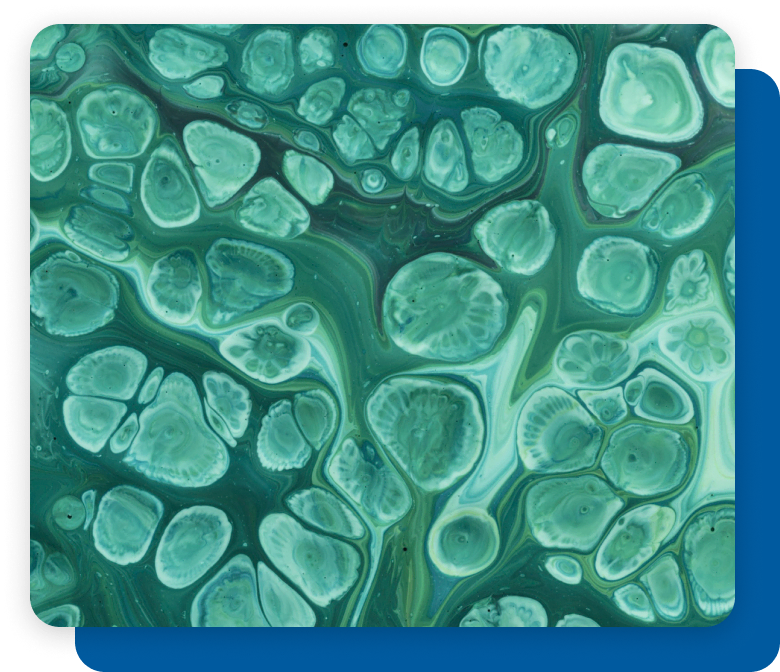
A biofilm is a community of living microorganisms, including bacteria, that adhere to a surface in a moist environment and reproduce. They establish this attachment by secreting a sticky, glue-like substance.
What is Legionella?
Legionella is a bacterium that can lead to Legionnaires’ disease, a severe and potentially fatal form of pneumonia. People contract Legionnaires’ disease by inhaling small droplets of water (aerosols), suspended in the air, that contain legionella bacteria.
What is the Relationship between Limescale, Biofilm and Legionella?
Where limescale has formed, as a result of the minerals in hard water precipitating out and bonding to surfaces, the perfect breeding ground for bacteria exists.
Factors Encouraging Legionella Growth:
• Legionella bacteria thrive in temperatures between 20-45°C.
• Stagnant water within this temperature range allows Legionella to multiply.
• Limescale, rich in minerals, becomes a food source for Legionella.
With the bacteria present and multiplying they will form biofilm. With Limescale and Biofilm now established, in an environment in which it is comfortable and well-fed, Legionella and other bacteria will multiply and thrive.
Prevention is Better than Cure
To maintain a Legionella-free water system, it must be free from limescale (including biofilm) and bacteria. Whether it’s a cold, hot, or process system, controlling scale build-up is essential.
Chemical dosing, although effective, is costly, time-consuming, and harmful to the environment. Moreover, as limescale accumulates, the problem worsens.
The Integro™ Advantage for Legionella Prevention
The Integro™, a unique water restructuring technology manufactured by Sidon Water, can certainly help as a secondary control solution that works continuously.
Installed on your water supply, it will ensure the removal of existing limescale throughout your water system. It will also offer complete ongoing prevention and significantly reduce rust and corrosion.
This is achieved by the Integro™ injecting electrons directly into the water. The electrons disrupt the bonding that would otherwise form between the scale forming minerals. Thanks to this effective system, you can finally mitigate the risks associated with Legionella.
The Integro™ technology there is no scheduled maintenance and is chemical free. This means that it is a sustainable and environmentally friendly solution.
What You’ll Get:
- Reduced Levels of Legionella
- Limescale Removal and Prevention
- Rust and Corrosion Control
- No Salt
- Improved Water Quality
- Significantly Reduced Energy Consumption
- Chemical Use Reduction
- No Magnets
Solutions Comparison
- Effective
- Partly Effective
- Ineffective
Features | Sidon Integro™️ | Other Water Conditioning Devices | Water Softening | Reverse Osmosis | Chemical Descaling |
|---|---|---|---|---|---|
Prevents Limescale Build-up | |||||
Removes Existing Scale Build-up | |||||
Maintenance Free | |||||
Does Not Require Salt or Chemicals | |||||
Reduces Energy Costs | |||||
Reduces Legionella |
Case Studies on Legionella
Explore Full Range of Case Studies Here


Other Resources on Legionella
Frequently Asked Questions
Legionella Control
What should be monitored after installation on a water-hygiene-sensitive site?
How do I know that the Integro™ is operating correctly?
Basic checks confirm that the control system is energised and functioning, but true performance verification should relate to the intended outcome. Depending on the application this might be scale condition, energy intensity, cleaning demand, heat-exchanger performance, membrane pressure/flux, permeate conductivity, chemical use or downtime.
What should be measured during a trial?
The metrics depend on the application. They may include scale condition, pressure drop, heat-transfer performance, energy per unit output, maintenance time, component failures, chemical use, cleaning frequency, membrane pressure/flux, permeate quality, conductivity, recovery and downtime.
Can microbial counts change while old deposits are being released?
Heavily scaled or contaminated systems may undergo a transition as deposits and debris are released. Water-hygiene-sensitive sites should therefore consider appropriate flushing, outlet cleaning, filtration and microbiological monitoring during commissioning.
How should the Integro™ fit into a wider water-safety plan?
Does the Integro™ kill Legionella?
No. The Integro™ is not positioned as a primary disinfection technology and should not be presented as killing Legionella. Legionella control still requires an appropriate water-safety regime including temperature control, flushing, monitoring, disinfection where required and compliance with applicable guidance.
Does the Integro™ replace chlorination, UV or other disinfection?
No. The Integro™ is a scale-management technology. Where disinfection is required, chlorination, chlorine dioxide, UV, thermal control or other approved barriers should be retained or managed according to the system’s risk assessment and regulatory requirements.
Can reducing scale make outlets and distribution systems easier to keep clean?
Can the Integro™ help with Legionella risk?
Yes, as an indirect supporting measure. By reducing hard scale and under-deposit niches, the Integro™ may make systems easier to keep clean and can reduce surfaces on which biofilm can be protected. That does not replace formal Legionella control measures.
Can microbial counts change while old deposits are being released?
Heavily scaled or contaminated systems may undergo a transition as deposits and debris are released. Water-hygiene-sensitive sites should therefore consider appropriate flushing, outlet cleaning, filtration and microbiological monitoring during commissioning.
What commissioning precautions should be used on heavily scaled or water-hygiene-sensitive systems?
Can scale come off in flakes or powder?
Yes. As historic deposits become less stable, some systems may release fine white material, grit, flakes or other debris. This can be a normal transitional effect and should be considered when commissioning older or heavily scaled systems.
Can removing old scale reveal leaks or existing defects?
Yes. Old scale can sometimes mask degraded seals, pinholes, failing valves or other defects. When historic deposits reduce, underlying mechanical problems may become visible. This is a system-condition issue rather than a new defect created by the treatment.
Can microbial counts change while old deposits are being released?
Heavily scaled or contaminated systems may undergo a transition as deposits and debris are released. Water-hygiene-sensitive sites should therefore consider appropriate flushing, outlet cleaning, filtration and microbiological monitoring during commissioning.
Can microbial counts change while historic deposits are being released?
Heavily scaled or contaminated systems may undergo a transition as deposits and debris are released. Water-hygiene-sensitive sites should therefore consider appropriate flushing, outlet cleaning, filtration and microbiological monitoring during commissioning.
Does the Integro™ eliminate biofilm?
No blanket claim should be made that it eliminates biofilm. Scale reduction can reduce protected niches and may support improved system cleanliness, but biofilm control depends on the wider water-management regime.
Does the Integro™ replace chlorination, UV, thermal control or other disinfection?
No. The Integro™ is a scale-management technology. Where disinfection is required, chlorination, chlorine dioxide, UV, thermal control or other approved barriers should be retained or managed according to the system’s risk assessment and regulatory requirements.
Why does limescale matter in water-hygiene management?
Can the Integro™ help with Legionella risk?
Yes, as an indirect supporting measure. By reducing hard scale and under-deposit niches, the Integro™ may make systems easier to keep clean and can reduce surfaces on which biofilm can be protected. That does not replace formal Legionella control measures.
Can microbial counts change while old deposits are being released?
Heavily scaled or contaminated systems may undergo a transition as deposits and debris are released. Water-hygiene-sensitive sites should therefore consider appropriate flushing, outlet cleaning, filtration and microbiological monitoring during commissioning.
Does the Integro™ eliminate biofilm?
No blanket claim should be made that it eliminates biofilm. Scale reduction can reduce protected niches and may support improved system cleanliness, but biofilm control depends on the wider water-management regime.
Can the Integro™ help reduce Legionella risk?
Yes, as an indirect supporting measure. By reducing hard scale and under-deposit niches, the Integro™ may make systems easier to keep clean and can reduce surfaces on which biofilm can be protected. That does not replace formal Legionella control measures.
Does the Integro™ kill Legionella?
No. The Integro™ is not positioned as a primary disinfection technology and should not be presented as killing Legionella. Legionella control still requires an appropriate water-safety regime including temperature control, flushing, monitoring, disinfection where required and compliance with applicable guidance.