
Solution pour la prévention et l'élimination du tartre
IntegroTM, restructuration de l'eau sans produits chimiques.
Le système de restructuration de l'eau le plus efficace du secteur
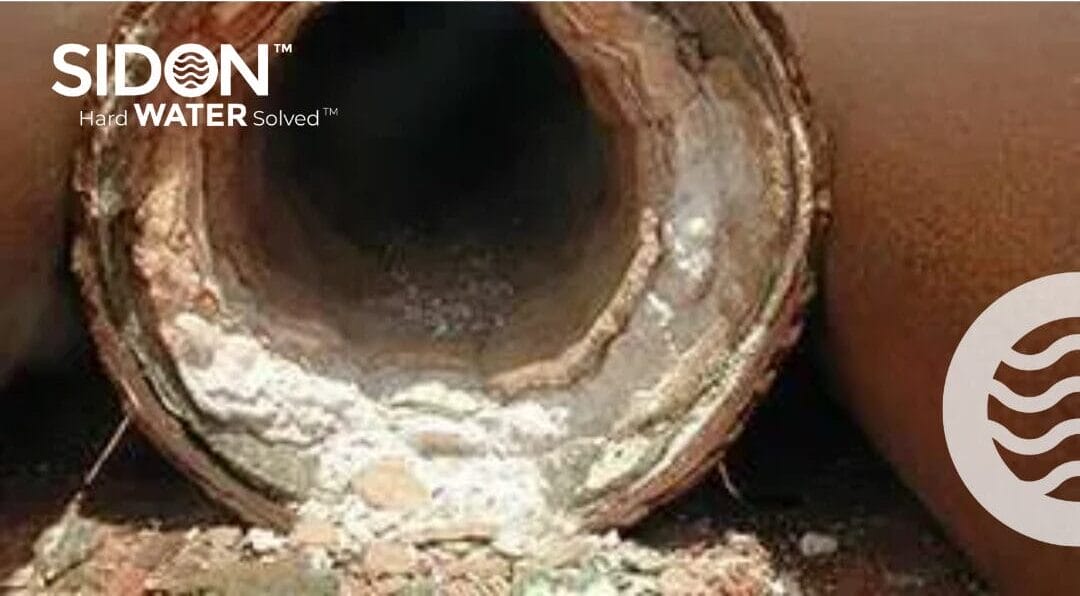
Cette technologie unique élimine les dépôts calcaires existants dans les systèmes d'alimentation en eau, les équipements et les appareils électroménagers, tout en empêchant la formation future de tartre. Notre solution est efficace quelle que soit la dureté, la température et la pression de l'eau, conditions dans lesquelles les solutions moins efficaces échouent.
Contrairement aux solutions traditionnelles de traitement de l'eau qui forcent les ions responsables de la formation du tartre à précipiter,IntegroTMdécompose et restructure ces ions, les laissant en solution sous leur forme neutre unique. Vous trouverezici (Le traitement de l'eau est-il efficace ?) plus de détails sur la différence entre notre technologie et les autres systèmes (aimants, bobines, échange catalytique, etc.).
Comment fonctionne Integro™ ?
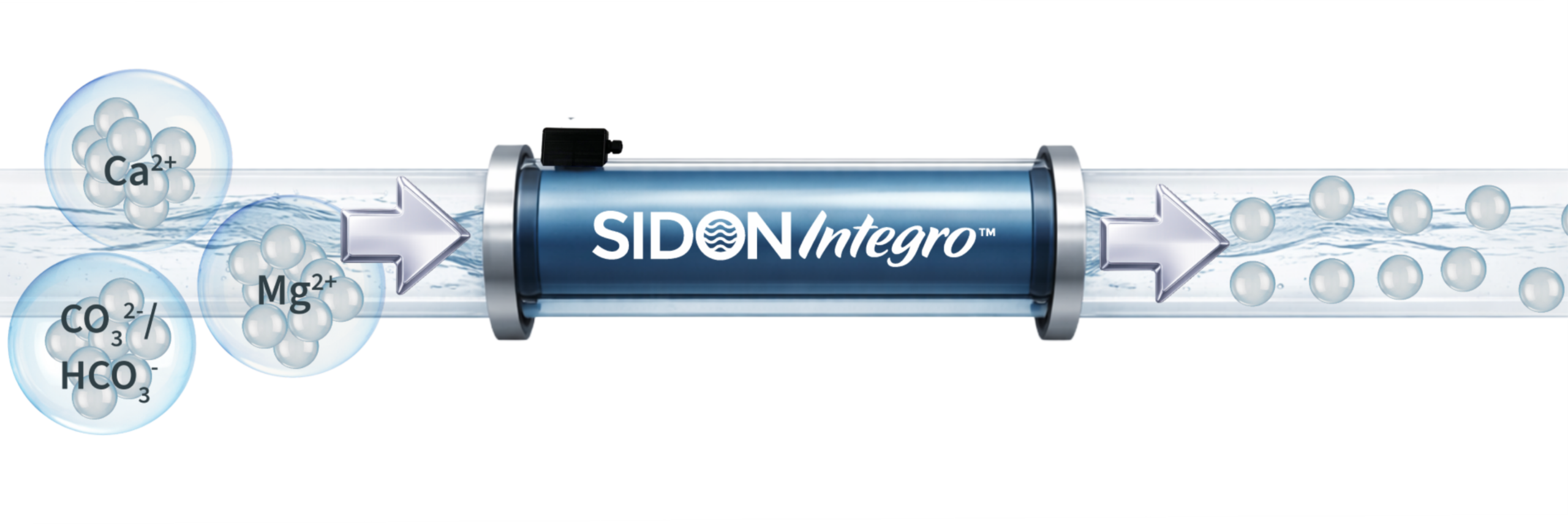
L'Integro modifie l'activité ionique de l'eau, empêchant ainsi le carbonate de calcium de former les dépôts calcaires durs et tenaces qui se fixent habituellement sur les surfaces. Cela permet de maintenir les minéraux responsables de la dureté en suspension dans l'eau qui s'écoule, plutôt que de les laisser former des dépôts denses sur les équipements.
- Les minéraux responsables de la dureté dissoute et d'autres substances responsables de la formation de tartre pénètrent dans l'Integro avec l'eau qui s'écoule.
- Lorsque l'eau traverse l'Integro, les conditions électrochimiques sont modifiées, ce qui perturbe le processus normal de formation du tartre.
- Il en résulte une eau dans laquelle le carbonate de calcium est moins susceptible de former un dépôt calcaire dur et tenace sur les surfaces du système.
Notre effet « Wetter Water »
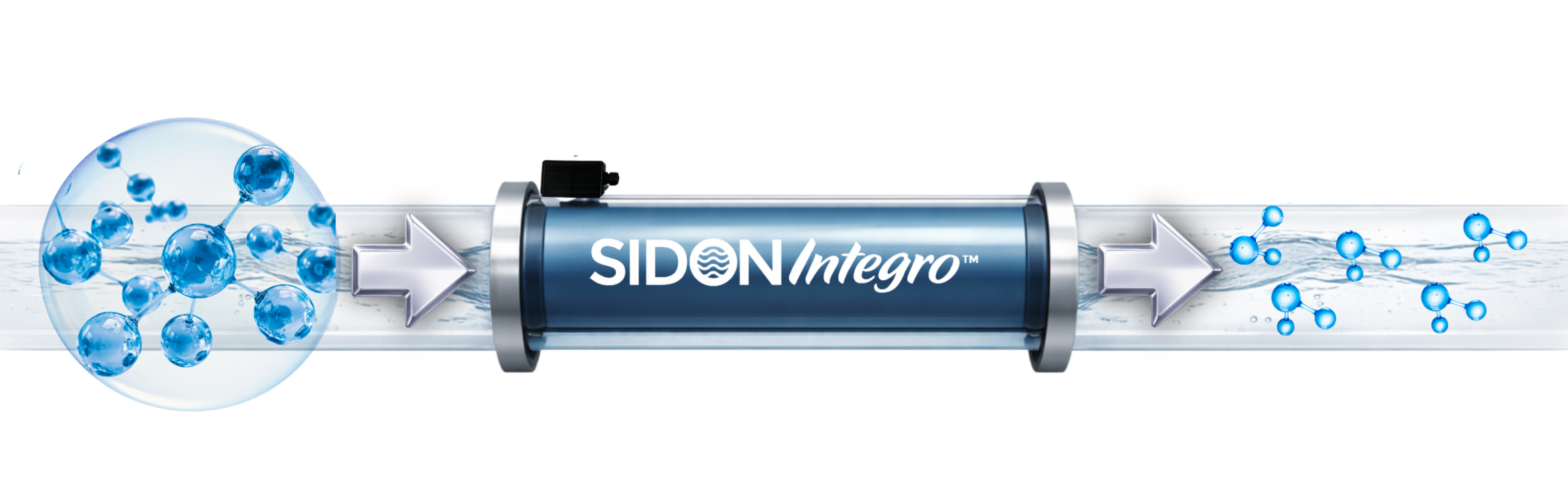
Un autre effet associé à l'eau traitée par Integro est l'amélioration de son pouvoir mouillant. Concrètement, on parle souvent d'« eau plus mouillante » : une eau qui interagit plus efficacement avec les surfaces, les médias filtrants et les structures membranaires.
- L'eau pénètre dans l'Integro sous sa forme habituelle, en agglomérats.
- Lorsque l'eau traverse l'Integro, son comportement est modifié de manière à améliorer le contact et la circulation à travers les médias filtrants.
- Il peut en résulter une « eau plus fluide », c'est-à-dire une eau qui traverse plus facilement les médias filtrants et les membranes, ce qui améliore les performances de filtration et d'osmose inverse.
L'Integro s'améliore...
L'utilisation d'Integro permet de réaliser rapidement des économies significatives et quantifiables. Voici quelques-unes des caractéristiques et avantages de notre solution :
Prévention et élimination du calcaire
Le système Integro™ empêche efficacement la formation de nouveaux dépôts calcaires et élimine la plupart des dépôts existants en 1 à 3 mois.
Réduction significative de la rouille et de la corrosion
En injectant des électrons dans l'eau, Integro™ contribue à réduire la corrosion dans vos systèmes, protégeant ainsi vos équipements et prolongeant leur durée de vie.
Amélioration du contrôle bactériologique
Le système empêche l'accumulation de calcaire et de biofilm, qui peuvent abriter des bactéries nocives telles que la légionelle.
Réduction de la consommation d'énergie
L'Integro™ améliore le transfert thermique jusqu'à 40 % en maintenant les surfaces chauffantes propres.
Respectueux de l'environnement
Cette technologie est sans produits chimiques et ne nécessite aucun entretien régulier ; elle restructure l'eau de manière naturelle sans nuire à l'environnement, offrant ainsi un traitement de l'eau durable et économique.
Études de cas sur la prévention et l'élimination du tartre
Découvrez ici l'ensemble de nos études de cas




Frequently Asked Questions
Prévention et élimination du tartre
Can removing old scale reveal leaks or existing defects?
Yes. Old scale can sometimes mask degraded seals, pinholes, failing valves or other defects. When historic deposits reduce, underlying mechanical problems may become visible. This is a system-condition issue rather than a new defect created by the treatment.
Can released deposits block strainers, filters or heat exchangers?
It can. Historical deposits that begin to release may migrate to filters, strainers, small orifices, shower heads or heat-exchanger passages. Where a system is heavily scaled, Sidon Water recommends an appropriate commissioning and inspection plan so released material can be managed.
Can released scale appear as flakes, powder or grit?
Yes. As historic deposits become less stable, some systems may release fine white material, grit, flakes or other debris. This can be a normal transitional effect and should be considered when commissioning older or heavily scaled systems.
How long does existing scale take to come away?
There is no fixed period. The rate depends on deposit thickness and composition, water chemistry, temperature, flow, system design and how long the deposit has been present. Field experience ranges from relatively rapid visible changes to progressive improvement over several months.
Does the Integro™ remove existing limescale?
The Integro™ is intended both to reduce new hard scale formation and to support gradual removal and destabilisation of existing deposits. Existing scale should not be expected to disappear immediately or uniformly from every part of a system.
How quickly will I notice a difference?
That depends on what is being measured. Reduction in new scale formation may be observed relatively quickly at some outlets or heat-transfer surfaces, while the gradual removal or destabilisation of historic deposits can take weeks or months (usually 1-3 months). Large, heavily scaled systems may take longer.
Does the Integro™ prevent every type of scale or deposit?
Does the Integro™ prevent every type of scale or deposit?
No technology should be presented as preventing every deposit under every condition. The Integro™ has primarily been tested with mineral scaling, particularly calcium-carbonate-related scale. Significant benefits have been observed in systems where deposits involving silica, iron, manganese, process contamination, corrosion products or biological material are present, but further quantification of effectiveness is needed in these areas.
Are there water chemistries or chemicals that may be unsuitable?
Yes. Applications involving strong caustics, unusual chemical dosing, aggressive cleaning-in-place regimes or specialist process chemistry should be reviewed before specification. The Integro™ should not be assumed to be compatible with every chemical-treatment programme without assessment.
Does the Integro™ work in very hard water?
Does the Integro™ work in very hard water?
The Integro™ has been used in very hard-water applications, including borehole supplies, and handles varying hardness levels without manual intervention or adjustment.
Is there a maximum water hardness for the Integro™?
No universal maximum has yet been defined. Hardness is only one part of the picture. Alkalinity, pH, temperature, dissolved solids, flow, pressure, residence time, the type of scale being formed, and other chemicals present in the system can all matter.
Is the Integro™ a water softener, and does it remove hardness minerals?
Is the Integro™ a water softener?
No. A conventional ion-exchange softener removes calcium and magnesium ions and replaces them, typically with sodium. The Integro™ does not remove hardness minerals and therefore does not chemically soften the water. It is a scale-management technology rather than an ion-exchange softener.
Does the Integro™ remove calcium and magnesium from the water?
No. Calcium and magnesium remain in the water. The objective is to change the way scale-forming minerals behave so they are less likely to form hard, adherent deposits on heat-transfer surfaces, pipework, valves, outlets and other equipment.
Will a hardness test show that the Integro™ is working?
Usually not. Because the hardness minerals remain in the water, a conventional hardness test may show little or no change before and after the Integro™. Performance should be assessed against the actual operational problem being treated, such as scale accumulation, maintenance frequency, heat-transfer performance or membrane behaviour.
How does the Integro™ reduce hard, adherent limescale?
Qu'est-ce que l'Integro™ ?
The Integro™ is an inline electrochemical water-conditioning system designed primarily to reduce the formation of hard, adherent mineral scale and to help existing scale deposits gradually become less stable. It treats water without salt-based regeneration, routine chemical dosing or sacrificial treatment media.
How does the Integro™ work?
Water passes through a purpose-designed treatment chamber in which a controlled electrochemical effect influences the way scale-forming minerals behave and crystallise. Rather than removing calcium and magnesium from the water, the Integro™ is designed to shift mineral growth away from hard, adherent deposits on equipment surfaces and towards less troublesome forms within the flowing water.